“Indigenizing Colonized Spaces: Centering Indigeneity in the Proto-American Past using Geographic Information Systems”
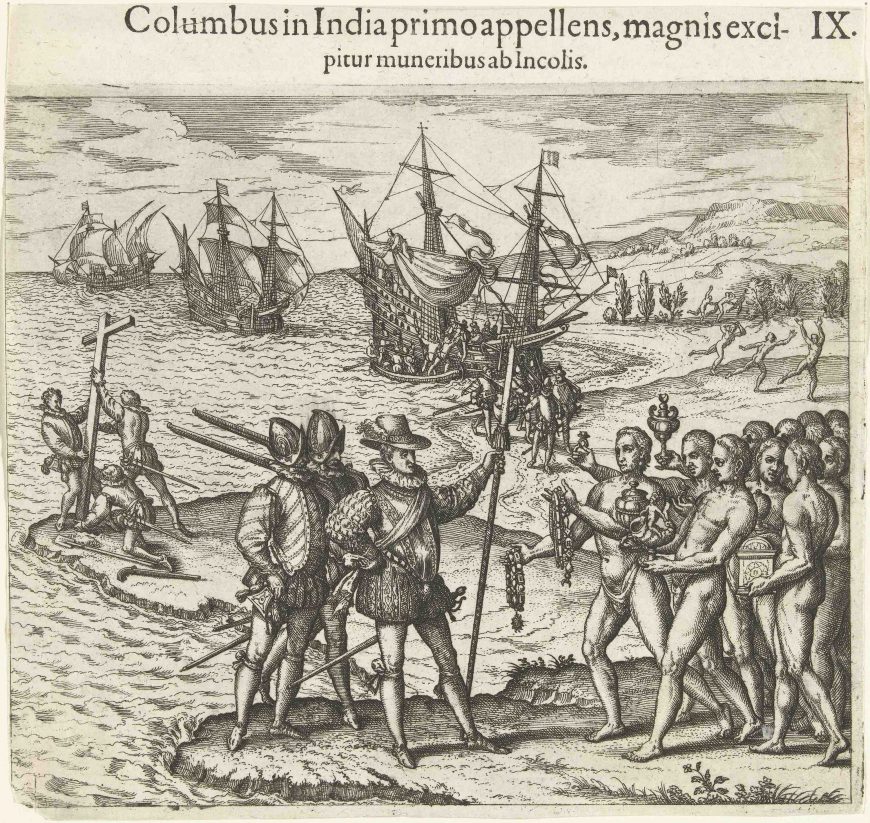
Silences are the places in literature and history where marginalized voices are not represented. Silences are more prevalent in early or proto-American literature since much of the literature for this period is written from a Eurocentric lens. The proto-American period, prior to the formation of American identity is an often-overlooked area of scholarship, and moreover Indigenous side of the first contact story of the Americas during the 16th century is disremembered. My dissertation thinks through these ideas; What if the Indigenous peoples that are referenced in 16th-century explorer narratives could talk back to the colonized narrative? What would that look like? More specifically, what would that look like on a spatialized interactive map that would aggregate all the narrative, historical, and cultural information? What if both European and Indigenous viewpoints could be seen in an interactive environment where narratives and counter-narratives can be explored in one location? My dissertation together with my digital humanities project the Cabeza Matrix proposes to contribute to this important and often overlooked area of early American and Indigenous studies.
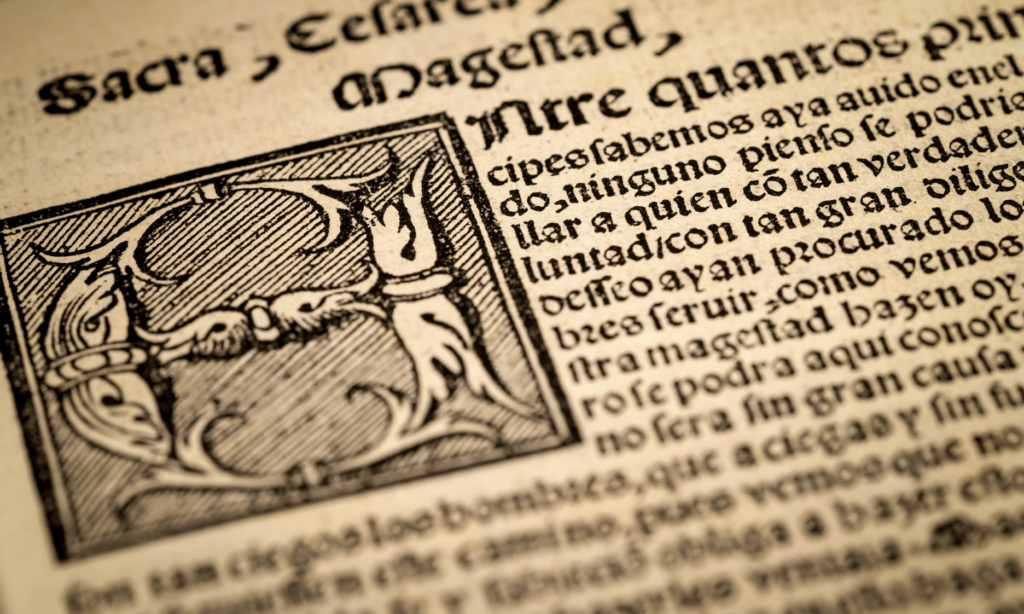
Narratives of early exploration in the Americas are both historical and modern, whose cartographic representations act as textual artifacts of imperialization and colonization. Historically, these textualized acts of colonialism dispossess Indigenous peoples of their voice and culture in proto-American literary spaces. While looking at narratives of early exploration in the Americas through modernity the voice of the colonizer is an overwhelming presence and the subject of academic study. Historically the study of early non-fictional accounts was passed over by literary academics in favor of canonical European and classical works of fiction. When scholars began to develop a uniquely American cannon, anthologies during the nineteenth century began with the origins of the English/Saxon language or the seventeenth century colonial settlement literature of William Bradford, John Elliot, and John Winthrop. During the mid to late twentieth century, anthologies begin the inclusion of colonization and exploration literature by adding non-fictional narratives, journals, and letters that were primarily studied by historians in the past. Most importantly it was not until the “cannon wars” as Kenneth Roemer suggests, around the 1980s, when the inclusion of Indigenous oral traditions of “Creation Stories” and European narratives of exploration serve as a canonical starting point for early American literatures. Indigenous visual and oral textualities would not see their own section in a major anthology until the twenty-first century until the 2022 release of The Broadview Anthology of American Literature vol. A. The notions of what is worthy of study by critics of the past has slowly been chipped away by scholars, like myself, who look at the early American literary canon and anthologies with an eye to the underrepresented authors and voices. Still there are gaps and silences where early Indigenous textual and non-textual works should be located.
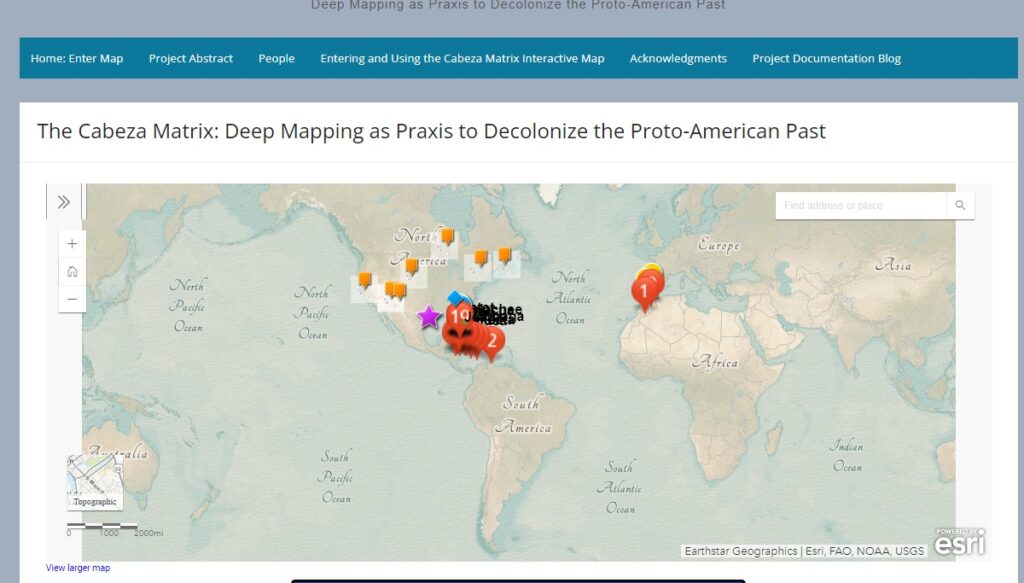
One such example of European explorer narratives, Alvar Nuñez Cabeza de Vaca’s 1542 narrative la Relación documenting the failed 1527 Pánfilo de Narváez’s expedition to Florida. The narrative of Cabeza de Vaca is a good source of information, in the early exploration period of the Southeastern Gulf region of North America. However valuable Cabeza’s narrative is, it is an example of the narrative silencing of Indigenous voices and spaces while articulating stereotyping and misconceptions of Indigenous peoples that is still endure today. Moreover, Cabeza’s la Relación is written from a Eurocentric perspective that filters Indigenous and European interactions through single-sided discourse. The aim of this project in conjunction with the digital project The Cabeza Matrix is to incorporate Indigenous documented oral or ethnographic archival stories, speeches, and narratives into an interactive map. A map that not only spatializes Cabeza’s chaotic retelling of his trek and interactions with Indigenous peoples across the southern portion of the United States. But a map that also has the ability to reimagine the Indigenous narrative as a counter narrative to colonizing discourse of the fifteenth and sixteenth centuries. The Cabeza Matrix uses Geographic Information System (GIS) applications to parse out the locational trajectory of Cabeza’s narrative in an interactive map while adding layers of critical and cultural information that innovates this particular moment in proto-American literature and history. Integrating layers of information together allows audiences to view a wide range of information at once or isolate information by toggling individual layers “on” or “off”. Toggling the map layers “off’ and “on” is meant to mimic Indigenous peoples “talking back to empire”. The Cabeza Matrix stands to be an important innovation in the way early or proto-American literature and history is studied by incorporating lost or silenced voices into conversations while presenting a counter-narrative to the canonized Eurocentric perspective of first contact.

The unique opportunity that The Cabeza Matrix presents is its accessibility to a wide audience; researchers, students, and the general public. The intersectionality of the project opens up a wide range of perspectives for viewing first contact literature for further study and analysis. My dissertation is only a small step in the long-term goals of my digital humanities project The Cabeza Matrix. It became necessary to abbreviate my dissertation and digital project to include resources available during the Covid pandemic. However, the pandemic limited my dissertation it does not limit the long-term trajectory for my project. My goal is to continue mapping narratives of exploration and integrating Indigenous counter-narratives creating an interactive visual data base. I will spend time after writing the dissertation to pay more attention to the questions that began to emerge as I was working on my dissertation and use more time to explore the answers that I was not able to complete due to time constraints. I will also move forward with the advice from Mary Heath at the University of Mississippi Press and revise my dissertation to book manuscript for publication.
